
2nd December, 2025
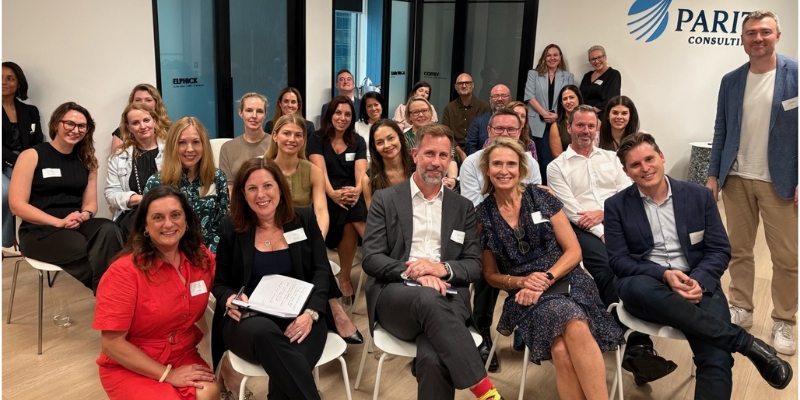
We were delighted to partner with Mayflower Consulting to host a dynamic panel discussion, where senior leaders revealed practical strategies for managing up in large organisations, building trust and influence, and taking control of your career growth.
Our guest panelists, Megan Aubrey - Senior Managing Director, Macquarie Asset Management, Michael Christofides - Director, Lending and Everyday Banking, AMP Bank, and Victoria Butt, CEO, Parity Consulting, held a robust conversation exploring how to navigate competing priorities, strengthen relationships with senior leaders, and position yourself for future opportunities. Here’s what we learned.
Managing Up in Large Organisations
Managing up effectively in complex organisations requires more than just doing your job well, it’s about building trust, anticipating needs, and communicating with clarity.
Be strategic and consistent in communication: Leaders are often juggling multiple priorities and don’t have time to chase information. Regular, concise, and predictable updates are invaluable, keeping them across key points in a digestible format.
Anticipate opportunities and communicate your ambitions: Share your goals and aspirations with your manager. Even if an opportunity doesn’t materialise immediately, making your interests known ensures you’re considered when the right role arises.
Build trust through reliability: Deliver on commitments consistently and flag issues early. Leaders value those who make their life easier by solving problems independently, providing realistic timelines, and keeping surprises to a minimum.
Understand competing priorities and personalities: Read the room, understand the pressures on different stakeholders, and adapt your approach. Knowing when to push back, when to escalate, and when to deliver quietly is critical in balancing multiple agendas.
Be commercial and outcome-focused: Thinking beyond your immediate role to the broader business impact demonstrates strategic awareness and builds credibility with senior leaders.
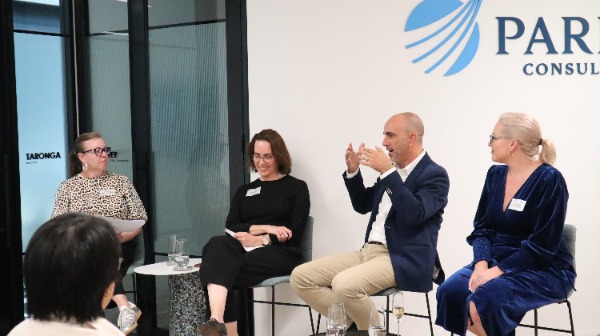
Host & MC - Sarah Penn, CEO Mayflower Consulting. Megan Aubrey - Senior Managing Director, Macquarie Asset Management. Michael Christofides - Director, Lending and Everyday Banking, AMP Bank.Victoria Butt, CEO, Parity Consulting.
What Great Managing Up Looks Like
Managing up isn’t about saying yes to everything or trying to impress. It’s about contributing thoughtfully, providing context, and positioning yourself as a trusted partner.
Contribute ideas and challenge thoughtfully: Don’t be afraid to question thinking or add a new perspective. Leaders don’t have all the answers, and your input can help shape better decisions.
Be proactive and transparent: Share new ideas, ambitions, and career goals openly. Even if not every idea lands, showing engagement with the bigger organisational picture signals initiative.
Know when and how to push back: Great contributors know the right moments to say “here’s a better way,” providing context, trade-offs, and recommended solutions without emotion. This elevates you from executor to thought partner.
Use networking to understand the business: Building relationships across the organisation helps you understand priorities, identify opportunities, and gain insight into how different teams operate.
Mentoring, coaching, and sponsorship: Recognise that different relationships serve different purposes, mentors for guidance, sponsors for advocacy, and coaches for skill-building - and leverage them appropriately.
Interested in attending more ParityPlus Events like this? Follow Parity on LinkedIn.
Building Trust and Influence
Trust is the foundation of influence. Senior leaders are looking for people they can rely on to deliver results, support their objectives, and make their life easier.
Deliver consistently and reliably: Trust grows when you follow through on commitments and manage expectations realistically.
Understand pressures and make leaders look good: Anticipate what your manager needs to succeed and act proactively. Doing things independently to help them shine strengthens credibility.
Read timing and context: Not every idea needs to be shared immediately. Observe when leaders are receptive, stressed, or distracted, and adjust your approach accordingly.
Operate with integrity, not politics: Influence comes from demonstrating competence, awareness, and support for organisational goals, rather than playing office politics or seeking personal visibility.
Taking Ownership of Your Career
Career ownership is about being proactive, patient, and strategic, even when the path isn’t linear or predictable.
Share your ambitions openly: Let your manager and network know what you want to achieve. Opportunities are more likely to come when people understand your goals.
Say yes more often than no: Taking on projects and experiences, even outside your comfort zone, builds skills and opens doors. It’s important to recognise when something isn’t a fit, but leaning into opportunities keeps momentum.
Be patient and resilient: Sometimes opportunities fall through due to business circumstances. Maintaining visibility and readiness ensures you’re considered when the next opening arises.
Invest in relationships: Networking shouldn't be transactional. Maintaining connections with colleagues, mentors, clients, and former teammates creates momentum for future opportunities. These relationships often lead to your next role long before a formal opening exists.
Be willing to learn as you go: You don’t always need to have the perfect skill set upfront. Saying yes to new challenges and figuring it out along the way builds capability and confidence.
Steering Your Career as a Leader
When you’re setting your own direction, the responsibility for growth and development falls entirely on you. The panel shared practical approaches to maintain clarity, adaptability, and continuous learning.
Surround yourself with smart, diverse voices: Mentors, coaches, advisers, peers, and team members provide feedback loops that help you identify blind spots and refine decisions.
Evaluate and refresh mentoring relationships: If you’ve had the same mentor for an extended period, consider whether it’s time to seek new perspectives. Be clear about what you want to achieve from each relationship and actively maintain it.
Set long-term goals and map milestones: Approach your career like a product roadmap. Identify your destination, then create smaller, achievable steps that guide your growth.
Allow yourself to evolve: Roles, industries, and personal ambitions change. Sometimes the best move is redefining your role, shifting focus, or adjusting your identity to match your evolving skills and aspirations.
Adaptability over resilience: In today’s rapidly changing workplace, from major technological transformations to AI-driven shifts, the ability to adapt is now more critical than simply enduring challenges.
Seek structured support: Coaches, mentors, and advisory boards provide guidance, accountability, and insight that is hard to generate alone, particularly when leading or founding organisations.
Key Lessons Across the Panel
Managing up is a skill, not a favour: Done well, it strengthens trust, builds influence, and allows leaders to operate effectively.
Communication is the backbone: Strategic, concise, and context-aware updates are essential to balance competing priorities and personalities.
Networking matters: Internal relationships help navigate organisational dynamics and create future career opportunities.
Proactivity beats waiting: Share ambitions, suggest solutions, and engage with the broader organisational vision.
Flexibility and adaptability are critical: Careers are rarely linear. Opportunities often come from unexpected directions, and the ability to pivot is a competitive advantage.
Trust is non-negotiable: Leaders value reliability, integrity, and individuals who make them look good while supporting organisational outcomes.
Continuous self-reflection: Regularly assess goals, growth areas, and mentorship needs to ensure your career trajectory remains aligned with your evolving priorities.

As the crowd hung back to reflect on the night's discussions, overall they agreed the panel highlighted that career growth and influence at work requires a balance of strategic thinking, proactive communication, relationship-building, and adaptability. When you’re navigating the complexities of a large corporate environment or even a smaller organisation, managing up and taking ownership of your career are essential tools for long-term success.
Why Partner with Parity?
We believe exceptional organisations are built on exceptional people. As an Executive Search, Permanent & Contractor recruitment agency specialising in senior and leadership roles in Product, Digital, Marketing, Transformation and Data across financial services and technology industries, we focus on unearthing talent who add to culture and performance while driving real business growth.
We connect these exceptional candidates with business leaders who need people to not just meet expectations, but exceed them - think of us as expert truffle hunters, uncovering the people who will truly make an impact in your organisation.
Reach out to one of our consultants today.